
Hygiene tips for kids include frequent hand washing and covering coughs and sneezes. These practices can prevent the spread of germs and reduce the risk of illness.
Good hygiene habits should be taught at a young age to promote lifelong healthy habits. In addition to hand washing and covering coughs, children should be encouraged to keep their environment clean and avoid sharing personal items such as towels or utensils.
Teaching children about hygiene can also help them develop a sense of responsibility and self-care. By making hygiene a priority, parents can help their children stay healthy and avoid illnesses.
Introduction To Child Hygiene
Child hygiene is of utmost importance for the overall well-being and health of children. It is crucial to teach them basic concepts of hygiene from an early age to develop good habits that will benefit them throughout their lives.
Children need to understand the significance of maintaining personal hygiene, such as washing hands regularly, brushing teeth, and taking baths. These practices help in preventing the spread of germs and reducing the risk of infections and illnesses.
Parents should emphasize the importance of cleanliness and teach their children to cover their mouths when coughing or sneezing, using tissues or elbows. They should also encourage kids to keep their surroundings clean and tidy, including their toys and personal belongings.
By instilling good hygiene habits in children, we can help them stay healthy, avoid illnesses, and promote their overall well-being. It is essential to make hygiene practices fun and engaging for kids, so they are motivated to follow them diligently.

Credit: www.beaumont.org
Hand Washing: The First Line Of Defense
Teaching kids proper hand washing techniques is essential for maintaining good hygiene. They should wash their hands before eating, after using the bathroom, and after playing outside. Encourage them to use soap and water, and to scrub their hands for at least 20 seconds. Proper hand washing can help prevent the spread of germs and illnesses. Additionally, it is important to teach children about when to wash their hands, emphasizing the importance of cleanliness in maintaining good health.
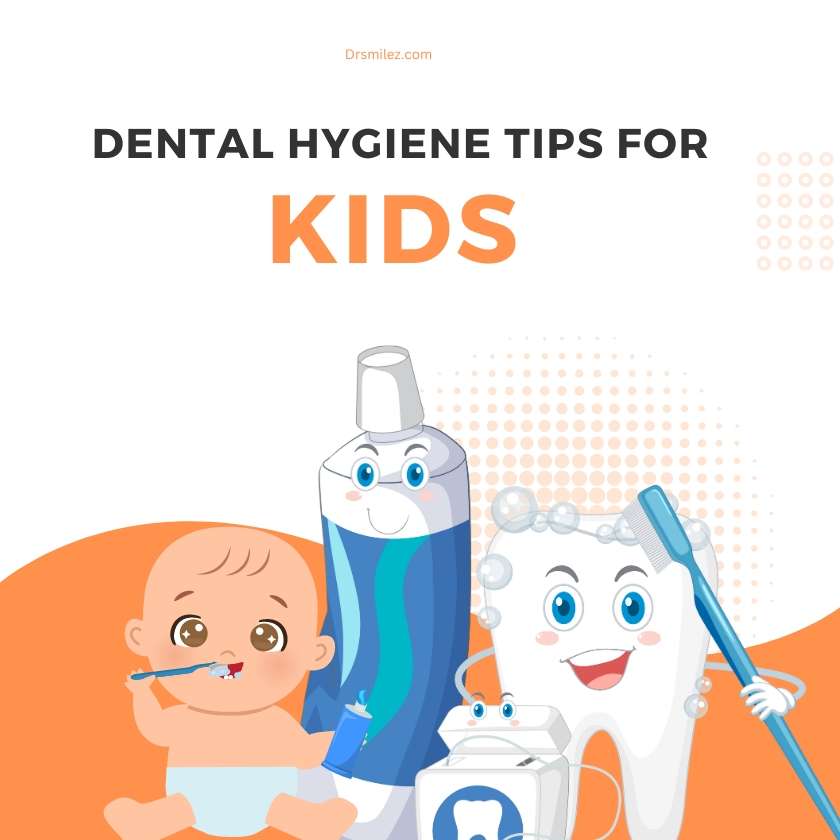
Oral Hygiene: A Lifetime Habit
Brushing basics:
- Brush your teeth at least twice a day, for two minutes each time.
- Use a soft-bristled toothbrush and fluoride toothpaste.
- Hold the toothbrush at a 45-degree angle and brush in gentle circular motions.
- Don’t forget to brush your tongue to remove bacteria and freshen your breath.
Flossing and dental visits:
- Floss once a day to clean between your teeth and remove plaque.
- Make regular visits to the dentist for check-ups and professional cleanings.
- Ask your dentist about sealants and fluoride treatments to protect your teeth.
- Avoid sugary snacks and drinks, as they can increase the risk of cavities.
By following these hygiene tips, you can maintain a healthy smile and prevent dental problems in the future.
Credit: drsmilez.com
Bathing And Body Hygiene
For effective bathing and body hygiene for kids, it is important to consider the frequency and techniques used. Children should be encouraged to bathe regularly, ideally once a day, to maintain cleanliness. When it comes to techniques, parents should teach their kids how to properly wash different body parts, including the face, hands, and feet. It is important to use mild and child-friendly products that are suitable for their delicate skin. The choice of products should be made carefully, avoiding harsh chemicals that may cause irritation. Parents can opt for gentle soaps or body washes specifically designed for kids, which are usually free from harmful ingredients. By following these hygiene tips, parents can ensure that their children maintain a clean and healthy body.
The Role Of Clean Clothing
Clean clothing plays a crucial role in maintaining good hygiene for kids. It helps in preventing the spread of germs and bacteria, keeping children healthy and fresh. Regularly washing and changing their clothes is essential for promoting overall cleanliness and well-being.
| Regular Changes |
| It is important for children to change their clothes regularly to maintain good hygiene. Wearing the same clothes for too long can lead to the accumulation of dirt, sweat, and bacteria, which can cause skin irritation and infections. Parents should encourage their children to change their clothes daily, especially after physical activities or if they have been sweating. |
| The Importance of Fabric |
| The choice of fabric also plays a crucial role in maintaining good hygiene. Cotton and other breathable fabrics are recommended as they allow air to circulate and prevent the buildup of moisture. Synthetic fabrics, on the other hand, can trap sweat and bacteria, leading to unpleasant odors and skin infections. Parents should choose clothes made of natural fibers for their children to wear. |
Healthy Habits For Sickness Prevention
| Hygiene Tips for Kids |
|---|
|
Teaching kids healthy habits is important to prevent the spread of sickness. When coughing or sneezing, encourage them to cover their mouth and nose with a tissue or their elbow. This can help prevent the spread of germs to others. It’s also important to teach kids to stay home when they are sick to avoid spreading illness. |
Nutrition And Hygiene
Eating healthy and maintaining good hygiene are essential for kids’ overall well-being. It’s important to instill clean eating habits in children from a young age. Encourage them to consume a variety of nutritious foods such as fruits, vegetables, whole grains, and lean proteins. Limit their intake of sugary snacks and drinks to promote dental health.
When it comes to food preparation and storage, ensure that all utensils and surfaces are clean before use. Teach kids to wash their hands properly before handling food and after using the restroom. Additionally, store perishable foods in the refrigerator at the correct temperature to prevent bacteria growth.
By practicing clean eating habits and following proper food preparation and storage techniques, you can help your kids develop healthy habits that will benefit them throughout their lives.
Credit: trainingexpress.org.uk
Educating Kids On Hygiene
When it comes to educating kids on hygiene, interactive activities can be a fun and effective way to teach them important habits. Setting a good example is crucial, as children learn by observing their parents and caregivers. Engaging in activities such as brushing teeth together, washing hands before meals, and demonstrating proper techniques can make hygiene practices more relatable and memorable for kids.
Interactive games and role-playing can also be incorporated into daily routines. For instance, turning handwashing into a song or a game can make it more enjoyable. Additionally, creating hygiene charts or reward systems can motivate children to maintain good habits. It’s important to explain the reasons behind each hygiene practice, emphasizing the importance of staying healthy and preventing the spread of germs.
In conclusion, by making hygiene education interactive and fun, we can instill lifelong habits in children and help them understand the significance of maintaining cleanliness for their well-being.
Frequently Asked Questions
What Are 10 Tips For Good Hygiene?
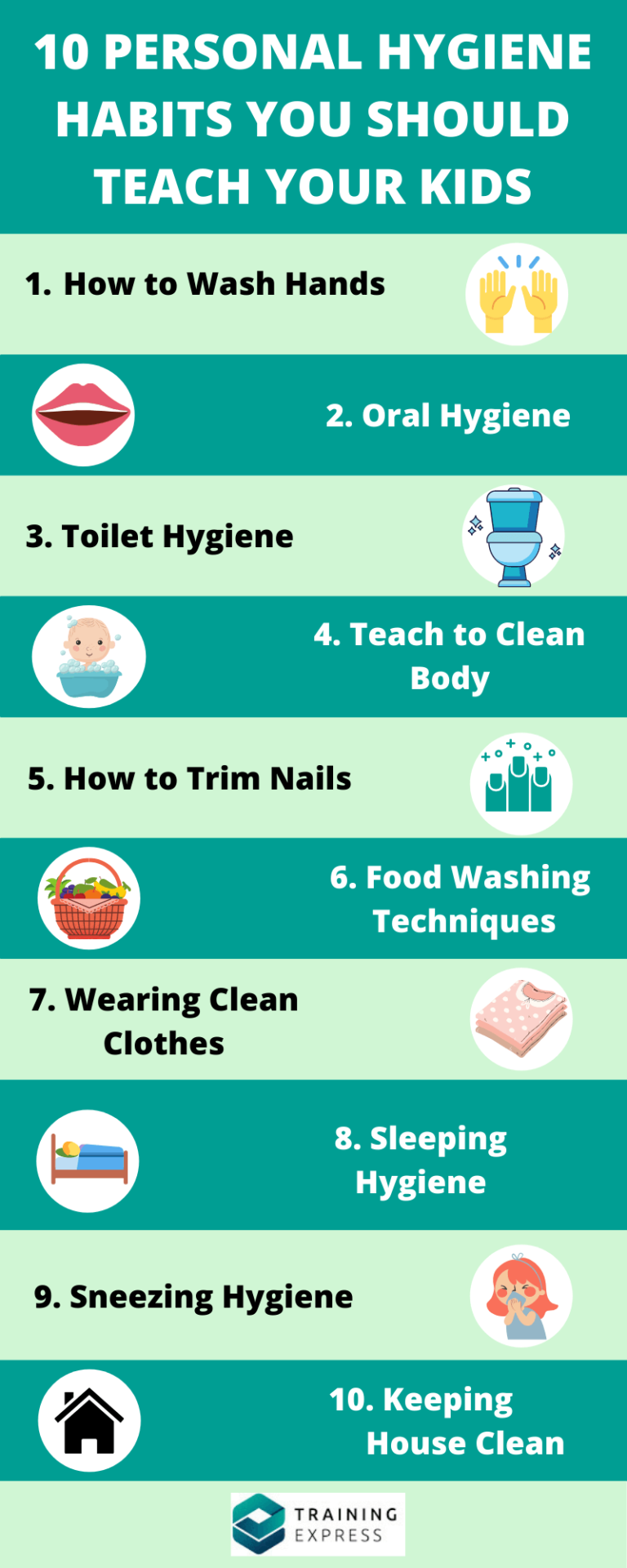
Here are 10 tips for good hygiene: 1. Wash your hands frequently with soap and water. 2. Cover your mouth and nose when you cough or sneeze. 3. Keep your nails clean and trimmed. 4. Take regular showers or baths.
5. Brush your teeth and floss daily. 6. Use deodorant or antiperspirant to control body odor. 7. Change and wash your clothes regularly. 8. Clean and disinfect frequently-touched surfaces. 9. Avoid sharing personal items like towels or razors. 10. Stay up to date with vaccinations for optimal health.
How Do You Get Good Hygiene For Kids?
Encourage regular handwashing. Teach proper tooth brushing. Keep them clean and dry. Practice healthy eating habits. Teach bathroom cleanliness.
How Do You Raise A Child’s Hygiene?
Encourage regular handwashing with soap and water. Teach proper dental care habits. Keep their nails clean and trimmed. Encourage regular bathing and hair washing. Maintain clean clothes and bedding.
What Are Three Ways Children Can Develop Good Hygiene Skills?
Three ways children can develop good hygiene skills are by washing their hands regularly, covering their mouth and nose when coughing or sneezing, and taking a bath or shower daily. These practices help prevent the spread of germs and promote overall health and cleanliness.
Conclusion
Incorporating good hygiene habits early on sets the stage for a lifetime of health and wellness. By following these practical tips, parents can help their kids develop good hygiene habits that will benefit them throughout their lives. Remember, instilling these habits from a young age can have a lasting impact on their overall well-being.